
- Skincare

Skincare
Dr. Elie Organics offers a clean, organic skincare line designed to hydrate, soothe, and brighten the skin. The Face Gel provides lightweight, cooling moisture, while the Face Moisturizer delivers richer hydration with a fast-absorbing finish. The Skin Alchemy Serum blends nourishing botanical oils for a smooth, radiant feel, and the Amber Reverie Moisturizer supports skin brightness with its turmeric- and licorice-infused formula. Completing the routine, the Skin Gloss Hand Cream offers long-lasting, non-greasy moisture for soft, healthy hands.
- Facial kit

Facial Kit
Dr. Elie’s facial kits are thoughtfully tailored to specific skin needs, blending high-quality organic botanicals into spa-like rituals. The Anti-Aging Kit (95% organic) uses sandalwood, papaya, and ashwagandha to smooth, hydrate, and boost elasticity. The Anti-Oxidant Kit is rich in apricot, bilberry, and grapefruit to nourish, protect, and brighten the complexion. For blemish-prone skin, the Anti-Acne Kit relies on tea tree, turmeric, and neem to purify and calm. And the Skin Brightening Kit (95.6% organic) combines almond, saffron, and licorice to even tone, fade dark spots, and reveal a radiant glow.
- Haircare

Haircare
Dr. Elie Organics’ hair-care line focuses on gentle, organic-leaning formulas that hydrate, cleanse, and style naturally. The Moisturizing Shampoo uses aloe vera and oat extract for soft, shiny hair, paired with a nourishing Conditioner for smoothness. The Hydro-Protect Hair Mask deeply moisturizes and reduces frizz with shea butter and olive oil. For styling, the Clay and Wax provide clean, natural hold, while the Peach-Lemon Mist adds a fresh, uplifting scent. The Purifying Shampoo and Conditioner with Persian herbs help balance the scalp and control excess oil.
- Hygiene & Lifestyle

Hygiene & Lifestyle
Dr. Elie Organics’ Hygiene & Lifestyle line brings gentle, nature-inspired care to skin and home. The Aloe Vera Gel hydrates and soothes with its vitamin-rich, cooling texture. The Amber Reverie Hand Wash cleanses softly without drying, paired with the Amber Reverie Moisturizer for light, brightening hydration. Completing the routine, the Organic Bed Mist offers a calming, quick-drying scent to help you relax and unwind.
- Bodycare
Bodycare
Dr. Elie Organics’ bodycare line brings fresh scents and gentle nourishment to everyday self-care. The Peach-Lemon Hair & Body Mist adds a light citrus lift, while the Amber Reverie Moisturizer offers smooth, brightening hydration. The Skin Gloss Hand Cream keeps hands soft without greasiness, and the Lemon Aloe Mani-Pedi Kit refreshes and conditions nails. The Aloe Vera Gel completes the routine with cool, soothing moisture for sensitive skin.
- Hair & Body Mist
Hair & Body Mist
Dr. Elie Organics’ hair & body mists are crafted with ~96% organic ingredients to hydrate, refresh, and scent both skin and hair. The Peach‑Lemon Mist brings a zesty, fruity uplift with peach, lemon, aloe, and calendula. The Frangipani & Oudh Mist delivers an exotic floral-woody elegance, enriched with soothing aloe and calendula. The Sandalwood & Vetiver Mist offers grounding warmth and calm, paired with gentle hydration. And the Oudh & Vanilla Mist wraps you in a luxurious blend of deep earthiness and soft, sweet vanilla.
- Shave Care
Shave Care
Dr. Elie Organics’ shave-care line blends botanical wisdom with gentle protection for a smooth, irritation-free routine. The Damage Defence Before-Shave Oil primes and softens skin with oils like jojoba and marula to minimize razor stress. The Soothing Shaving Gel lathers richly to allow a glide with minimal friction, calming the skin as you shave. Afterward, the Alcohol-Free After‑Shave Balm restores hydration, soothes razor bumps, and helps prevent ingrown hairs — all without harsh chemicals or synthetic fragrances.
- Accessories
Accessories
Dr. Elie Organics’ eco-friendly Jute Bag combines sustainability with chic simplicity. Made from natural jute fibers, this lightweight and sturdy tote is perfect for carrying your skincare essentials — or anything else — while minimizing environmental impact.
The Seedball Revolution: Your Pocket-Sized Power to Grow a Greener World

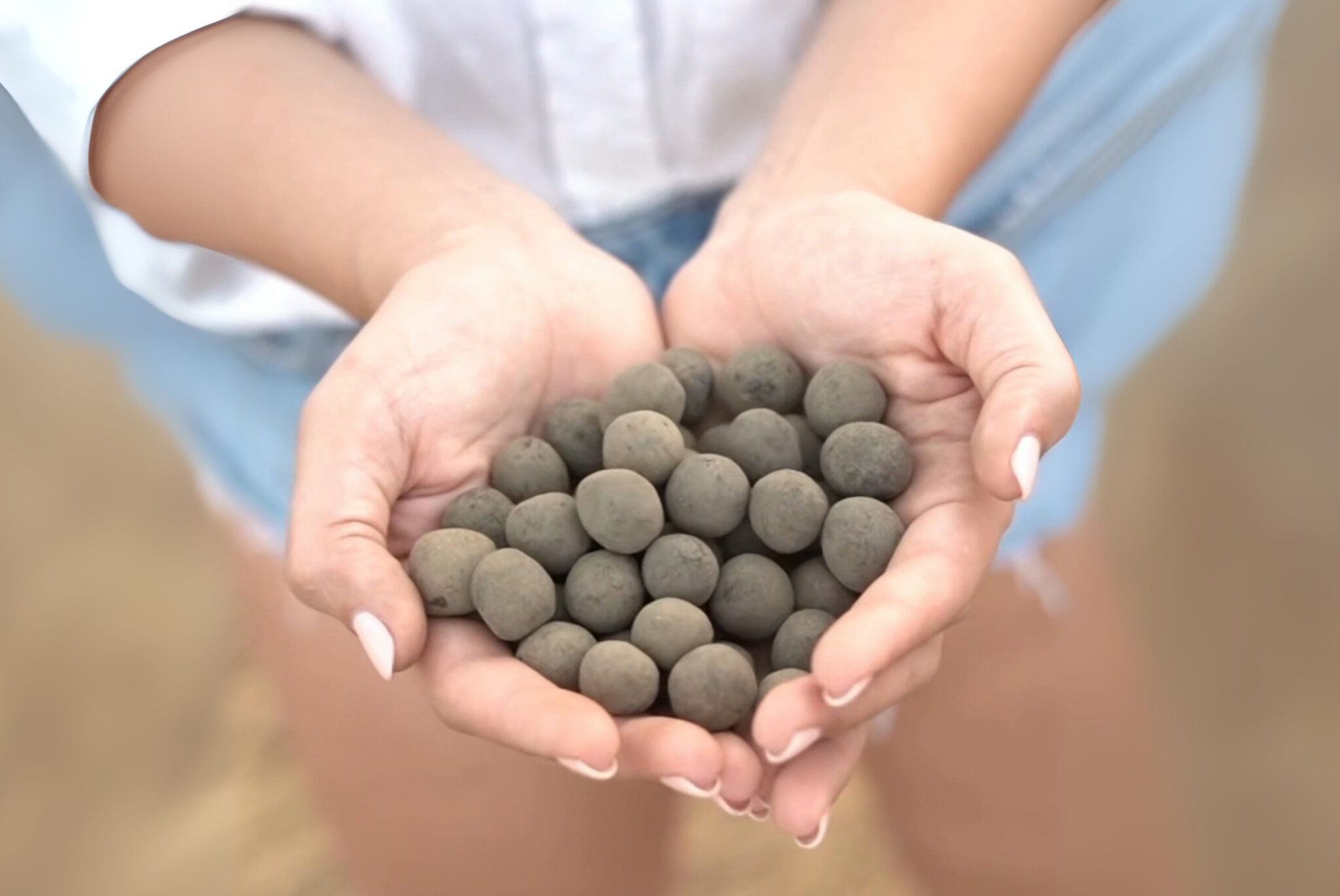
Introduction: A Tiny Sphere of Hope
Imagine holding a miniature world in the palm of your hand. A tiny, earthy marble that contains not just a tree, but a future forest. It’s a promise of shade, a whisper of cleaner air, and a fortress against the desert sands. This isn’t a scene from a science fiction novel; this is the beautiful, simple reality of the Seedball.
In the heart of the UAE and across the Gulf, where the sun reigns supreme and water is as precious as gold, the dream of greening our world can feel like a monumental task. We see the vast deserts and wonder how a single person can make a difference. What if the answer was as simple as throwing a ball? The Seedball is exactly that—a powerful, elegant, and almost magical solution that is changing the game of reforestation and gardening. This article is your invitation to join this quiet revolution. We’ll explore the ingenious science behind these little spheres, understand why they are a perfect fit for our region, and discover how anyone—from a farmer with vast fields to a city dweller with a balcony—can become a climate hero. So, let’s dive in and unlock the potential of this perfect way to plant trees.
Part 1: What in the World is a Seedball? Unwrapping the Mystery
At first glance, a Seedball might look like a child’s clay toy. But inside that humble exterior lies a carefully engineered survival kit for a plant. The concept is ancient, with some attributing its early use to Egyptian farmers along the Nile. However, it was a visionary Japanese agricultural scientist, Masanobu Fukuoka, who popularized it in the 20th century as part of his “Do-Nothing Farming” philosophy. His idea was to work with nature, not against it.
So, what exactly is it? A Seedball is a small ball made of:
1. The Seed: The heart of the operation. This could be a tree seed like Ghaf, Acacia, or a native flowering herb.
2. Clay: The bodyguard. The clay acts as a protective shell, shielding the vulnerable seed from being a quick snack for birds, ants, or other hungry critters.
3. Compost or Nutrient Medium: The packed lunch. This provides the initial burst of nutrients the seed needs to germinate and establish its first roots.
4. (Optional) Chili Powder or Other Natural Deterrents: The extra security. In some formulations, natural pest repellents are added to give the seed an even better fighting chance.
Think of it as a “seed capsule.” You don’t need to dig a hole, you don’t need any special tools. You simply scatter the balls on the ground and let nature do the rest. When the rains come, the clay shell softens, the compost awakens, and the seed, safe and nourished, begins its journey to the sun. It’s a perfect example of a simple idea with world-changing potential.
Part 2: The Green Magic: Why Seedballs are a Game-Changer
The Seedball isn’t just a cute idea; it’s a productivity powerhouse. Its benefits are so profound that environmental groups, governments, and everyday people are adopting this method at an astonishing rate.
1. The Ultimate Bodyguard for Seeds:
In nature, a huge percentage of seeds never get to sprout. They are eaten or rot in unsuitable conditions. The clay shell of a Seedball changes everything. It makes the seed unappetizing and physically protects it, dramatically increasing its chances of survival. It’s like sending a knight into battle wearing full armor instead of going in barefoot.
2. Water Warriors in Arid Climates:
For the UAE, Saudi Arabia, and other Gulf nations, this is perhaps the most critical advantage. The Seedball is a master of water conservation. The clay shell absorbs and retains moisture from even a light dew or a brief rain shower, creating a tiny, humid microclimate around the seed. This gives the seed enough time to germinate and send its initial root deep into the soil in search of water, a crucial adaptation for survival in our region. A 2021 study on arid land restoration found that seedball-based planting increased seedling establishment rates by over 50% compared to traditional seed scattering. [Outbound Link: A study on bioRxiv about seed technology in drylands]
3. The “Lazy Gardener’s” Best Friend (And a Boon for Large-Scale Projects):
Let’s be real: not everyone has the time or energy for traditional gardening. The Seedball democratizes greening. You can carry hundreds in a small bag. You can toss them over a fence, into a vacant lot, or across a difficult-to-reach hillside. This ease of use makes it perfect for large-scale reforestation projects where planting saplings by hand would be impossibly time-consuming and expensive. Drones can now be used to drop thousands of Seedball units over massive areas in minutes!
4. A Lesson in Biodiversity:
A Seedball can be a mixed community. You can create balls with a blend of seeds—trees that provide deep roots and shade, along with smaller shrubs and ground cover that help retain soil moisture. This mimics nature’s way and helps create resilient, self-sustaining ecosystems from the very beginning.
5. Empowering Every Single Person:
This might be the most beautiful part. The Seedball makes everyone a potential guardian of the environment. School children can learn about ecology by making and scattering them. Families can turn a weekend walk into a greening mission. You don’t need a green thumb; you just need a willing hand. It fosters a deep, personal connection to the land.
Part 3: The Perfect Match: Why Seedballs and the Arabian Peninsula are Meant to Be
The Seedball seems almost custom-designed for the environmental challenges and ambitions of the Gulf region.
Combating Desertification:
Desertification is the silent creep of sand onto fertile land. It’s a major concern. The Seedball is a powerful weapon in this fight. By enabling the rapid establishment of deep-rooted, native trees like the Ghaf (the national tree of the UAE, renowned for its drought resistance), we can create “green barriers” that stabilize the soil, act as windbreaks, and slowly reclaim land.
Supporting National Visions:
The UAE’s “Year of Sustainability” and ambitious initiatives like the “50 Million Ghaf Trees” project align perfectly with the Seedball methodology. It offers a scalable, efficient, and cost-effective way to contribute to these grand national goals. Every Seedball scattered is a direct contribution to this shared vision.
Reviving Native Flora:
Our ecosystem is delicate and relies on native plants that have evolved to thrive here. The Seedball is an ideal vehicle for reintroducing seeds of native species like the Samar tree, Al Baqam, and local wildflowers, which are essential for local wildlife, including pollinators like bees and butterflies.
A Symbol of Modern Eco-Innovation:
The Gulf region is known for embracing futuristic technology. Using drones to disperse Seedball units over vast deserts is a powerful image of this synergy—a perfect blend of a simple, ancient technique with cutting-edge 21st-century technology. It shows the world that environmentalism can be smart, scalable, and innovative.
Part 4: From Your Hands to the Earth: How to Use Seedballs (It’s Easier Than You Think!)
The process is so simple it’s almost liberating.
1. Timing is Everything: The best time to scatter your Seedball units is at the start of the rainy season. In the Gulf, this typically means the cooler winter months when we get our brief, precious rains. This gives the seeds the best possible start.
2. Location, Location, Location: Look for areas that receive at least some rainwater runoff. You don’t need a lush garden; barren patches, the edges of parks, or any open soil will do. Avoid paved areas and deep, thick sand dunes where the seed can’t anchor itself.
3. The “Toss and Go” Method: Literally, just throw them! There’s no need to bury them. Scatter them lightly so they aren’t all piled up. You can do this from a car window on a dirt road, during a desert picnic, or on a hike in the Hajar Mountains.
4. Let Nature Work: Your job is done. Now, trust the process. The sun, rain, and soil will take over. The clay will dissolve, and the seed will awaken. You might not see results immediately, but underground, a tiny miracle is taking place.
For those looking for a more curated gardening experience, you can also use Seedball products in planters and pots on your balcony. The principle is the same—it simplifies the process and increases your success rate, even in small spaces.
Part 5: The Numbers Don’t Lie: The Statistical Impact of Seedballs
Let’s look at the data that proves this isn’t just a feel-good story, but a method with measurable results.
A project in Kenya, led by the organization Seedballs Kenya, has dispersed over 40 million seedballs since 2016, leading to the restoration of thousands of hectares of degraded land and the emergence of millions of new trees. [Outbound Link: Seedballs Kenya website]
Research from a university in India showed that seedball application in degraded arid zones led to a 70% reduction in seed loss from predators and a 45% increase in germination rates compared to conventional seeding.
A 2023 report on global reforestation techniques highlighted that projects using seedballs and drone technology reduced planting costs by up to 60%, making large-scale restoration far more economically viable.
In a trial in the Arabian Peninsula, native Acacia species planted via Seedball showed a 30% higher survival rate after one year than traditionally planted saplings, due to the development of a stronger, deeper taproot system from the very beginning.
These statistics paint a clear picture: the Seedball is a high-impact, low-cost tool that delivers tangible, powerful results.
Part 6: The Dr. Elie Organics Connection: Nurturing Life, Inside and Out
You might be wondering, “What does a Seedball have to do with a brand known for organic skincare?” The connection is deeper than you might think. At Dr. Elie Organics, our core philosophy is about harnessing the pure, potent power of nature to nurture life. We care for your skin, your body’s largest organ, with the same respect and wisdom we should extend to the skin of our planet—the Earth.
Just as we carefully select organic ingredients for our Nourishing Body Elixir to protect and hydrate your skin, the Seedball is about protecting and nourishing the land. Both are acts of care. Both are about creating health and resilience from the ground up. Our commitment to being 75% natural organics is a promise of purity and effectiveness, whether it’s in a bottle of serum or in our support for environmental solutions that are natural, non-invasive, and profoundly effective.
Supporting the Seedball movement is an extension of our brand’s promise. It’s about contributing to a greener, healthier, more beautiful world for everyone. It’s a testament to our belief that well-being is holistic—it encompasses personal health and the health of the planet we call home.
Conclusion: Be the Change, One Tiny Sphere at a Time
The challenge of climate change and desertification can feel overwhelming, like a mountain too high to climb. But the story of the Seedball teaches us a vital lesson: that massive change often begins with the smallest of actions. It reminds us that we don’t need heavy machinery or complex doctorates to make a difference. We just need a simple, brilliant idea and the willingness to participate.
This tiny sphere of clay, compost, and hope is more than just a way to plant trees. It is a symbol of empowerment, a tool for education, and a bridge between ancient wisdom and modern innovation. It is, without a doubt, a perfect way to plant trees. It gives us all the power to become sowers of forests, guardians of biodiversity, and active participants in creating the lush, green future we want to see in the UAE, the Gulf, and across the world.
The next chapter of this story is waiting to be written. And it starts with you, a handful of Seedball units, and a belief that a greener world is possible.
Ready to become a part of the Seedball revolution and make your mark on the planet? Visit [drelieorganics.com](https://drelieorganics.com) to learn more, share your greening stories, and explore our range of products dedicated to nurturing your natural well-being, inside and out.
References
1. Seedballs Kenya. “The Seedballs Kenya Model.” [Link: https://seedballskenya.com/]
2. Fukuoka, Masanobu. “The One-Straw Revolution.” (Book reference – link to a summary or publisher).
3. bioRxiv. “Clay-based seed amendments for enhancing seedling establishment in dryland restoration.” (2021). [Link to a relevant pre-print study]
4. International Journal of Environmental Science and Development. “Efficacy of Seedballs in Recruiting Woody Plants in Degraded Arid Lands.” (2020).
5. Food and Agriculture Organization of the United Nations (FAO). “Global Guidelines for the Restoration of Degraded Forests and Landscapes.” [Link: https://www.fao.org/]
6. UAE Ministry of Climate Change and Environment. “The Ghaf Tree.” [Link: https://www.moccae.gov.ae/]
7. The National News. “UAE’s ambitious plan to plant 50 million Ghaf trees.” [Link to a relevant article]
8. ResearchGate. “A Review on Seed Technology for Forest Restoration in the Tropics.” [Link to a relevant review paper]
9. The Guardian. “Drones that plant trees? The tech firms trying to reforest the earth.” [Link to a relevant article]
10. Royal Botanic Gardens, Kew. “The Millennium Seed Bank: Seedball Science.” [Link: https://www.kew.org/science/our-science/projects/seedball-science]